02 · Verify

ISO 14064-3
GHG Lead Verification Professional Development Pathway

From understanding the verification lifecycle to supervised verification practice.

Phase 1 develops an end-to-end understanding of the ISO 14064-3 verification lifecycle and translates that understanding into a practical, risk-based Verification Plan. Phase 2 puts the plan against actual organisational GHG information and evidence through supervised verification practice.

Understand→Plan→Test→Evaluate→Conclude
Phase 13 Contact Days
Phase 22 Contact Days
CoP RequirementMinimum 35 Practice Hours
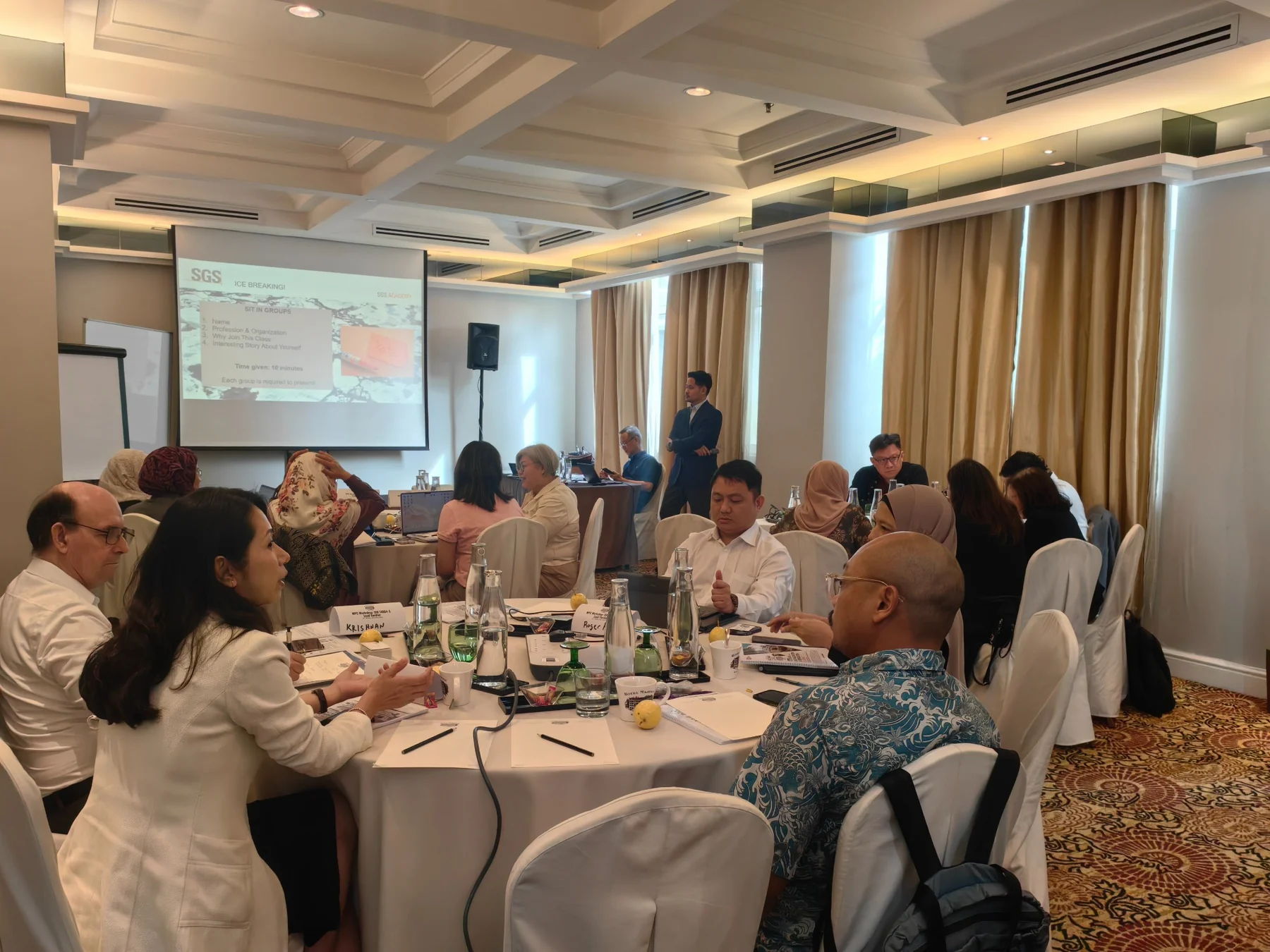
ISO 14064-3 verification lifecycle classroom learning
One Verification Journey · Two Phases

Learn the lifecycle. Build the plan. Put it against evidence.

ISO 14064-3 verification is a lifecycle — from initiation and planning through verification activities, evaluation, conclusion and reporting. The pathway develops verifier capability progressively rather than treating classroom learning and CoP as disconnected products.

Phase 1 · Understand & Plan

ISO 14064-3 GHG Verification Lifecycle

3-Day Structured Learning

Understand how the complete lifecycle connects and progressively translate the verifier’s decisions into a practical, risk-based Verification Plan.

Main professional output: Verification Plan

Phase 2 · Execute

ISO 14064-3 GHG Verification Execution CoP

2 Contact Days (Minimum 35 Practice Hours)

Apply the verification approach against actual organisational GHG information and evidence through supervised practice.

Main outputs: Working Papers · Findings · Verification Conclusion

Change Sides of the Table

You built the GHG statement. Now learn how to challenge it.

As a preparer, your job is to build and support the statement. As a verifier, your job is to ask what could be wrong, where the risk is, what evidence supports the number and whether that evidence is sufficient.

Verification Is Not Recalculation

Not Just

  • Re-running formulas
  • Checking arithmetic
  • Comparing totals

Verification Requires

  • Risk assessment
  • Materiality
  • Evidence evaluation
  • Sampling
  • Data Owner interviews
  • Professional judgement
The Practice Gap

You understand ISO 14064-3. Can you actually perform the verification?

You may know the terminology. You may have attended an online course or classroom programme. But professional verification begins when the plan meets actual evidence.

A Verification Plan may look strong on paper. Real evidence is where it is tested.

01Can you identify where the significant verification risks really are?
02Can you determine what evidence is sufficient and what needs further testing?
03Can you conduct an interview that tests the GHG assertion rather than simply asks questions?
04Can you recognise when evidence contradicts the original verification approach?
05Can you decide what to test next and when the plan must change?
06Can you document findings that will withstand technical review?
07Can you support and communicate a defensible verification conclusion?
Phase 1 · 3-Day Structured Learning

ISO 14064-3 GHG Verification Lifecycle

Understand the lifecycle. Build the plan that makes it executable.

Participants progressively work through verification objectives, criteria, scope, assurance, organisational context, strategic analysis, risk, materiality, evidence requirements, sampling, interviews, testing, evaluation, conclusion and reporting.

UnderstandExplain the ISO 14064-3 verification lifecycle and how its stages connect.
DefineEstablish verification objectives, criteria, scope and assurance requirements.
AssessConduct strategic analysis and identify significant verification risks.
DesignDetermine evidence, sampling, interview and testing requirements.
PlanDevelop a practical, risk-based and defensible Verification Plan.

Main Phase 1 Output

The Verification Plan

The Verification Plan is not the lifecycle itself. It is the verifier’s documented response to the lifecycle — translating what the engagement must achieve into how the verification will be carried out.

Then the plan meets evidence.

A plan may look complete in the classroom. Actual evidence may change the picture.

Evidence may be incomplete. Interviews may reveal new risks. Recalculations may expose discrepancies. The verifier must decide what to test next, whether the evidence is sufficient and whether the verification approach must change.

Phase 2 · Verification Execution CoP

From Verification Plan to defensible verification conclusion.

2 Contact Days + Minimum 35 Practice Hours

Participants apply the Verification Plan against actual organisational GHG information and evidence through supervised practice. The CoP extends beyond the two contact days into off-site verification work, documentation, technical review, improvement and finalisation.

Plan→Test→Find→Adjust→Conclude
ApplyApply a risk-based Verification Plan in supervised practice.
TestConduct interviews, tracing, sampling and recalculation.
EvaluateAssess relevance, completeness and sufficiency of verification evidence.
FindIdentify discrepancies, evidence gaps and verification findings.
AdjustRevise verification activities when actual evidence changes the risk picture.
ConcludeSupport and communicate a defensible verification conclusion.
Professional Outputs

Artefacts make the learning visible.

The pathway progressively develops professional verification work products rather than relying on attendance alone.

Phase 1Verification Assignment Brief · Risk & Materiality Assessment · Evidence & Sampling Plan · Verification Plan
Phase 2Working Papers · Interview Records · Evidence Tests · Recalculations · Verification Findings · Verification Conclusion · Final Presentation
Certificate of Practice

Practice is where professional judgement becomes visible.

Phase 2 forms the applied-practice layer of the pathway. Participants undertake supervised verification work, document their activities and findings, respond to review and complete the defined programme requirements.

Minimum Practice RequirementMinimum 35 practice hours across contact sessions, off-site verification work, evidence review, documentation, technical review, improvement and finalisation.
Professional BoundaryThe Certificate of Practice recognises completion of the programme’s supervised practice requirements. It is not presented as accreditation of the participant as an independent verification body or automatic authorisation to issue third-party verification statements.
Programme Schedule

ISO 14064-3 · November 2026

Two phases. One verification journey.

5-Day GHG Lead Verification Pathway
Phase 116–18 Nov 2026Verification Lifecycle · 3 Contact Days
Phase 223–24 Nov 2026Verification Execution · 2 Contact Days (35 Practice Hours)
Inquire Now · WhatsApp

Inquire on WhatsApp · 016 419 4343