
01 · Measure

ISO 14064-1
GHG Inventory Practitioner Pathway

Build the GHG Inventory — Traceable. Explainable. Verification-Ready.

A two-phase practitioner pathway that moves from structured GHG inventory development into supervised implementation using actual organisational information, Data Owners and supporting evidence. The objective is not simply to calculate emissions — it is to build an inventory that can be traced, explained and defended.
Define→Identify→Quantify→Document→Defend
Phase 12 Contact Days
Phase 23 Contact Days
CoP RequirementMinimum 35 Practice Hours
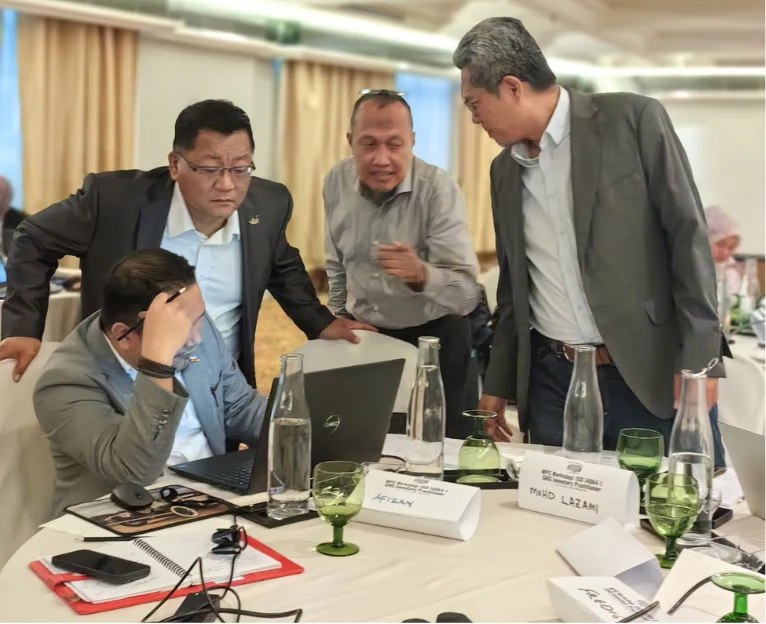
Professionals working together during practical ISO 14064-1 learning
One GHG inventory journey · Two phases

Learn the process. Then apply it when the organisation, people and data are real.

A credible GHG inventory requires more than calculating tonnes of CO₂e. Practitioners must decide what belongs within the inventory, which emission sources are relevant, what activity data is required, which methodologies and emission factors should be applied, and how assumptions and data gaps should be handled.

Phase 1 · Learn & Develop

ISO 14064-1 GHG Inventory Development

2-Day Structured Learning

Learn the ISO 14064-1 inventory-development process and apply it through a structured organisational case.

Main output: GHG Inventory Working Pack

Phase 2 · Apply & Build

ISO 14064-1 GHG Inventory Implementation CoP

3 Contact Days + Minimum 35 Practice Hours

Apply the process against actual organisational GHG information, source data and supporting evidence under supervision.

Main outcome: Working organisational GHG inventory that can be traced, explained and supported by evidence.

The Practice Gap

You attended carbon accounting training. Can you actually build the inventory?

You may understand Scope 1, Scope 2 and Scope 3. You may know how an emission factor works. But an actual organisation rarely arrives as a clean classroom exercise.

A GHG inventory can be numerically correct and still be difficult to defend.

01Can you determine the organisational and reporting boundary?
02Can you identify emission sources that have not been neatly listed for you?
03Can you determine what activity data is required and where it is held?
04Can you work with Data Owners to clarify incomplete or inconsistent information?
05Can you justify the methodology, emission factor, estimates and assumptions used?
06Can you trace the final reported number back to supporting evidence?
07Can you defend the inventory when someone starts asking questions?
Phase 1 · 2-Day Structured Learning

ISO 14064-1 GHG Inventory Development

Learn the process. Build the working foundation.

Using a practical organisational case, participants progressively work through the connected decisions required to develop the inventory. The emphasis is not simply on getting the calculation right. It is on being able to explain where the number came from and how the inventory was developed.

DefineDefine organisational and reporting boundaries and determine what belongs within the inventory.
IdentifyIdentify Scope 1, Scope 2 and relevant Scope 3 emission sources.
DetermineDetermine appropriate activity data, emission factors and quantification approaches.
QuantifyCalculate organisational GHG emissions and removals using recognised methodologies.
Apply JudgementAddress estimates, assumptions and data gaps.
DocumentDevelop traceable GHG inventory documentation suitable for reporting and verification.
Main Phase 1 Output

GHG Inventory Working Pack

A structured set of working records showing how the inventory was defined, quantified and documented — including boundaries, emission sources, data requirements, methodologies, assumptions and supporting information.

Then the organisation becomes real.

Classroom knowledge is tested when the organisation, the people and the data are real.

Actual GHG inventory implementation involves incomplete records, different Data Owners, overlooked emission sources, assumptions that require justification and information that may not line up neatly. That is where Phase 2 begins.

Phase 2 · Certificate of Practice

ISO 14064-1 GHG Inventory Implementation CoP

3 Contact Days + Minimum 35 Practice Hours

Participants engage with actual organisational information, Data Owners, source records and supporting evidence. Under supervision, they progressively develop the inventory, maintain working records and document their experience through the CoP logbook.

Real people. Real data. Real decisions.

EngageWork with Data Owners to obtain and clarify organisational GHG information.
EvaluateReview activity data and supporting evidence for completeness, consistency and suitability.
QuantifyDevelop Scope 1, Scope 2 and relevant Scope 3 calculations using actual organisational information.
ResolveAddress assumptions, inconsistencies, incomplete information and data gaps.
DocumentMaintain source-to-report traceability, working papers and supporting evidence.
Present & DefendPrepare and support the completed GHG inventory through technical review and final presentation.
Certificate of Practice

Practice makes the work visible.

The Certificate of Practice is based on supervised application and documented work, not classroom attendance alone.

CoP LogbookDocument the participant’s applied practice and supervised development.
Working PapersMaintain traceable records of the inventory-development process.
Data Review & CalculationsReview source information and quantify organisational emissions.
Assumption & Data-Gap RecordsDocument decisions where information is incomplete or uncertain.
GHG Inventory ReportBring the inventory, methods, data and supporting evidence together.
Technical Review & Final PresentationRespond to challenge and support the completed inventory.
Optional Next Step

Experience the Inventory Under Verification Scrutiny

Building the inventory is one professional experience. Having someone independently question it is another.

Participants and organisations that complete the GHG Inventory Practitioner Pathway may choose to continue their learning by experiencing how a completed inventory is prepared for and responds to a verification process, where an appropriate opportunity is available.

From the inventory-preparer / organisational side, participants may be exposed to activities such as:

  • preparing supporting evidence requested during verification;
  • responding to clarification questions;
  • explaining boundary and methodology decisions;
  • demonstrating source-to-report traceability;
  • supporting Data Owner interviews; and
  • responding to evidence gaps or discrepancies.
Programme boundary: This optional exposure is from the organisational / inventory-preparation side of the verification process. It is not verifier training, independent-verifier experience or authorisation to perform third-party verification.
For Companies

Bring the CoP Into Your Organisation

Send your team. Apply the learning to your own GHG inventory.

Companies enrolling 3 or more participants in the ISO 14064-1 Practitioner Pathway may request for their organisation to be considered as a CoP Host Organisation. If selected, the company’s participating team completes Phase 1 and Phase 2 while the supervised CoP engagement is structured around the company’s actual organisational GHG information.

The participating team can progressively define boundaries, identify emission sources, engage internal Data Owners, collect and review activity data, quantify emissions, resolve assumptions and data gaps, and develop traceable working records using the company’s own information.
Phase 1Train the Team
Phase 2Apply It to Your Company
OutputWorking Organisational GHG Inventory
OptionalPrepare for Verification Scrutiny
CoP Host Organisation selection is subject to site suitability, data availability and quality, access to appropriate Data Owners, confidentiality arrangements, supervisor capacity, scope confirmation and programme scheduling. The completeness and verification-readiness of the resulting GHG Inventory Report depend on the organisational information and supporting evidence available.
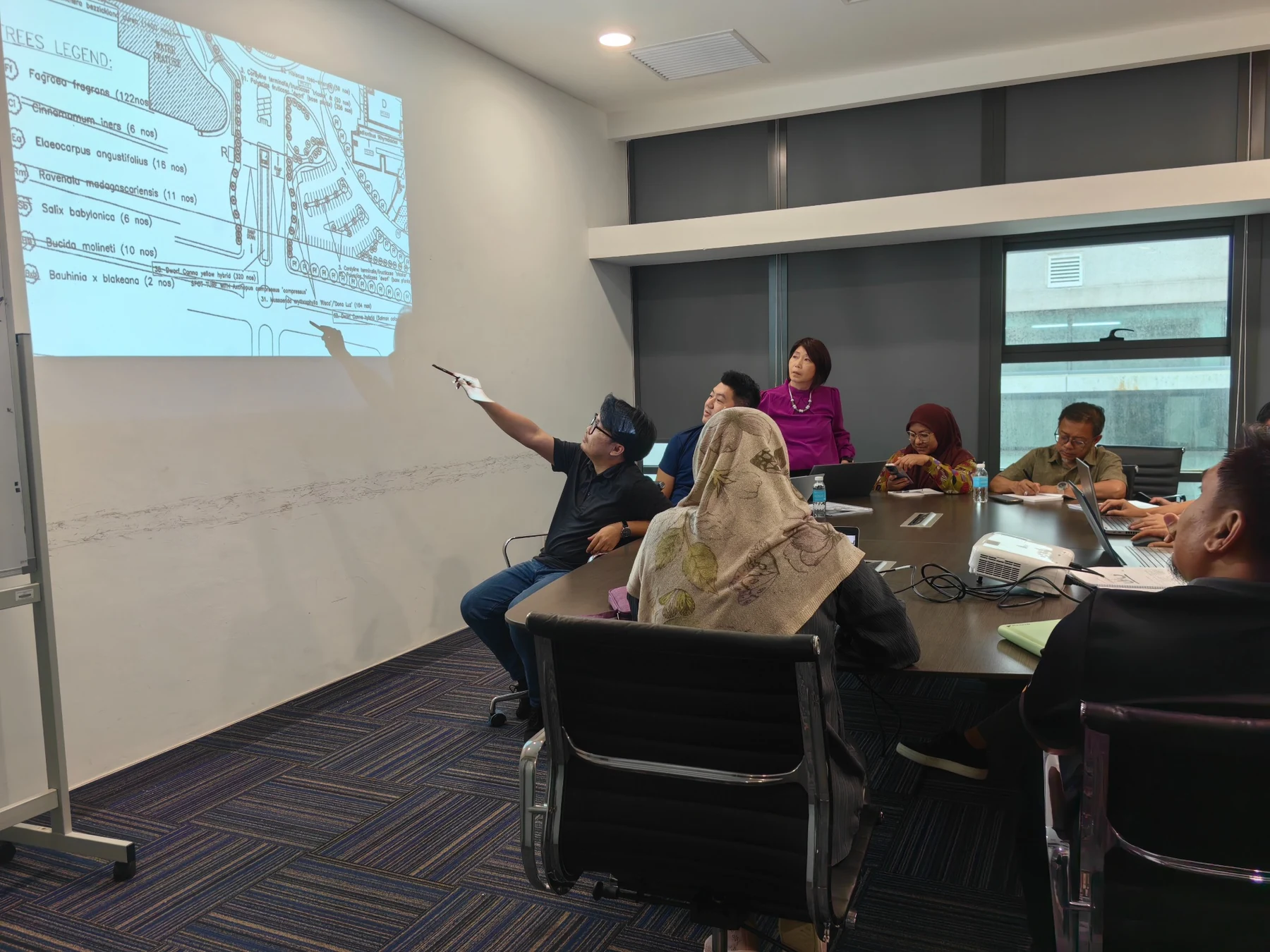
Company team and practitioners discussing organisational information
Who Should Join

For practitioners ready to move beyond awareness.

Suitable for professionals involved in organisational GHG accounting, sustainability, ESG, environmental management, internal audit or verification readiness.

Phase 1 EntrySuitable for professionals with prior exposure to sustainability, ESG, environmental management, carbon accounting or organisational reporting.
Phase 2 EntryPrior completion of an ISO 14064-1 GHG Inventory Workshop or equivalent, subject to readiness review.
The Complete Practitioner Journey

Learn → Apply → Build → Defend

Phase 1 develops the process. Phase 2 applies it against actual organisational information. Technical review challenges the inventory, calculations, assumptions and evidence.

ISO 14064-1

Interested in the next cohort?

Current dates and company-cohort options are provided on enquiry.

Inquire Now · WhatsApp
Inquire on WhatsApp · 016 419 4343